
If you want to see the absolute bleeding edge of Vibe Coding, you have to look East.
While Western developers are debating whether AI-generated code is “maintainable,” a new breed of hyper-productive solo-founders in China is quietly dominating the market. At the forefront of this movement is Liu Xiaopai a legendary indie hacker from Chongqing who is proving that in the AI era, product sense is the only programming language that matters.
He isn’t just using AI to write code; he is orchestrating AI agents like a CEO managing a multinational tech company.
Here is the breakdown of one of the most ruthless and effective Vibe Coders on the planet.
The Profile: From Corporate Veteran to AI Maverick
Liu Xiaopai is not a coding novice. He interned at Microsoft Research Asia at 19 and spent 10 years building global products at Cheetah Mobile before pivoting entirely to AI for the last 9 years.
But what makes him a “Best Vibe Coder” isn’t his traditional engineering background. It’s his absolute willingness to abandon the old ways of writing software and fully embrace the Agentic Workflow.
- The Flex: He is famously known on X (Twitter) as the guy who burned $50,000 in a single month on Claude Code tokens. He doesn’t write code line-by-line; he brute-forces development by letting massive LLMs do all the heavy lifting.
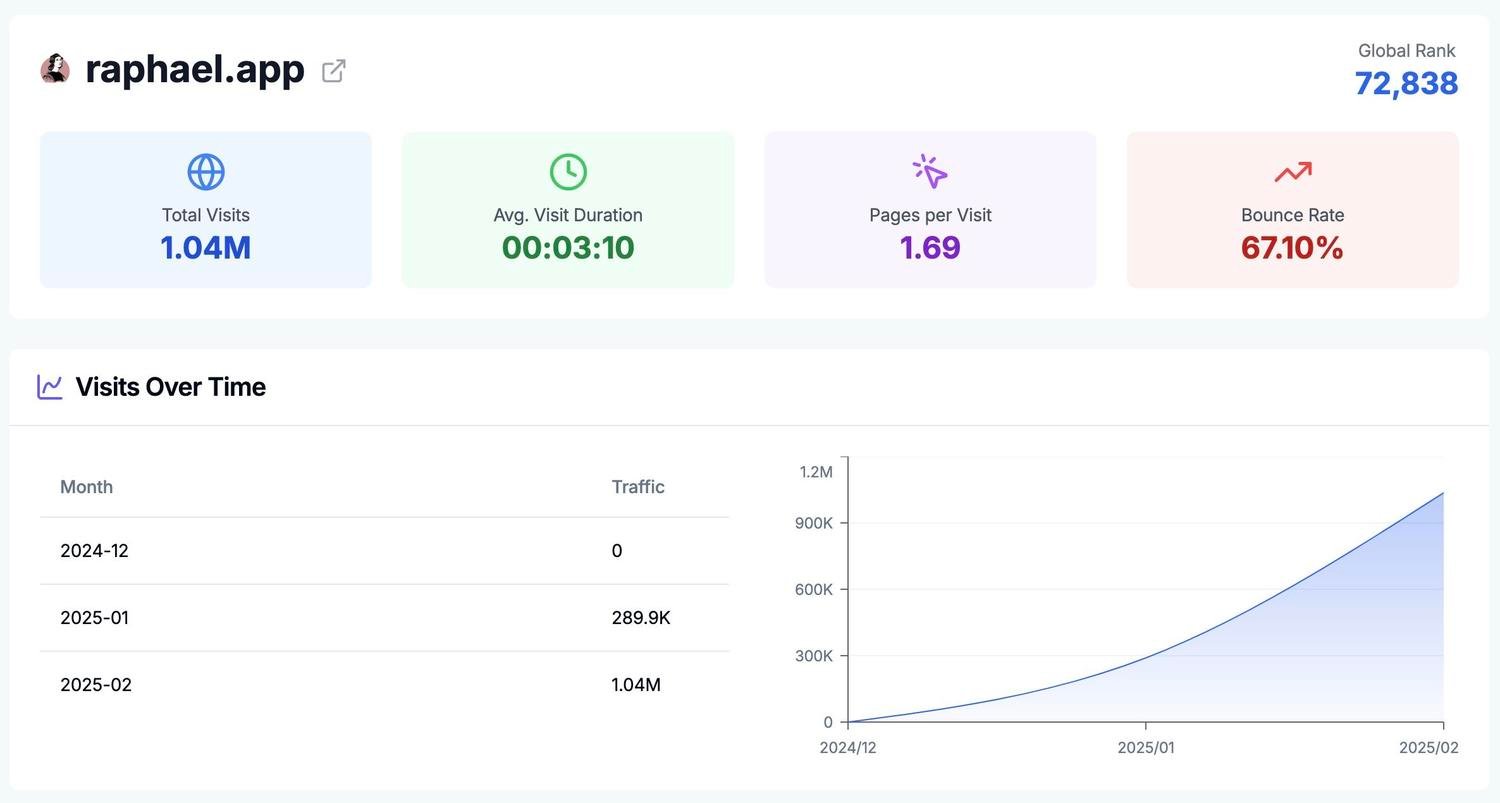
- The Hit Product: His flagship product, Raphael AI (an AI image generation tool), went from 0 to 1 million Monthly Active Users (MAU) in just one month.
- The Catch: He did it with zero SEO and zero paid advertising. It was built entirely through AI orchestration, relying on pure product-market fit and word-of-mouth.
Liu’s Vibe Coding Playbook
Liu operates on a few core philosophies that every Vibe Coder should study.
1. “Build a Business, Not an App”
Liu constantly reminds his community of a harsh truth: “Build a business, not an App”. For Liu, Vibe Coding is a probability game. Because AI allows you to build an MVP in days (sometimes hours), the goal is to ship as many high-quality “experiments” as possible to see what sticks. He calls his market research method “Flipping Stones” (翻石头)—constantly turning over user complaints and global trends to find hidden, unmet needs.
He believes that the barrier to entry is no longer programming; it is the ability to understand user needs.
2. The “Agent Orchestra” Workflow
Most developers use one AI tool. Liu acts as a conductor for multiple AI agents simultaneously. His typical tech stack involves using a visual controller (like his open-source project ralph-desktop) to command an army of bots:
- Claude Code (Opus): Writing the development plan and core logic.
- Codex CLI: Reviewing code and writing unit tests.
- Gemini CLI: Designing the UI/UX and running end-to-end automated testing in the browser.
He just gives the orders. The AIs write, test, and deploy.
3. The Ultimate Flex: Zero-Review Deployment
The most mind-blowing aspect of Liu’s operation is how he empowers non-technical people.
His co-founder is a liberal arts major and former operations director who had never written a line of code before last year. After 6 months of learning AI-assisted programming, she was building features that generated thousands of dollars in monthly profit.
Recently, Liu noticed that his own code reviews were slowing her down. Inspired by the philosophy that “every layer of review makes you 10x slower”, he made a radical Vibe Coding decision: He handed over all the repository access, servers, databases, and API keys directly to his non-technical co-founder.
He completely removed himself from the loop. Now, an ops director with 6 months of AI experience handles the entire development, deployment, and monitoring lifecycle of a massive AI product by herself. That is the true power of Vibe Coding.
The Takeaway for You
Liu Xiaopai’s story destroys the myth that you need a large engineering team to build a global SaaS product.
- Speed over Architecture: If an AI can generate a 3D modeling tool in 8 seconds or a complete MVP in a day, don’t waste weeks arguing about cleanly abstracted code.
- Trust the Vibe: If your AI agents can write it, and your non-technical co-founder can deploy it without breaking the server, ship it.
- Find the Pain: Let Claude write the syntax; you spend your time finding the user’s pain points.
Liu Xiaopai proves that the future belongs to the orchestrators. The only question is: Are you ready to flip some stones and start vibing?
Want to see the exact prompts Liu uses to orchestrate his Claude and Gemini agents? Subscribe to the Best Vibe Coder newsletter for our upcoming technical breakdown.
Leave a Comment